Bare-root vs container stock: which holds up better on a replanted block?
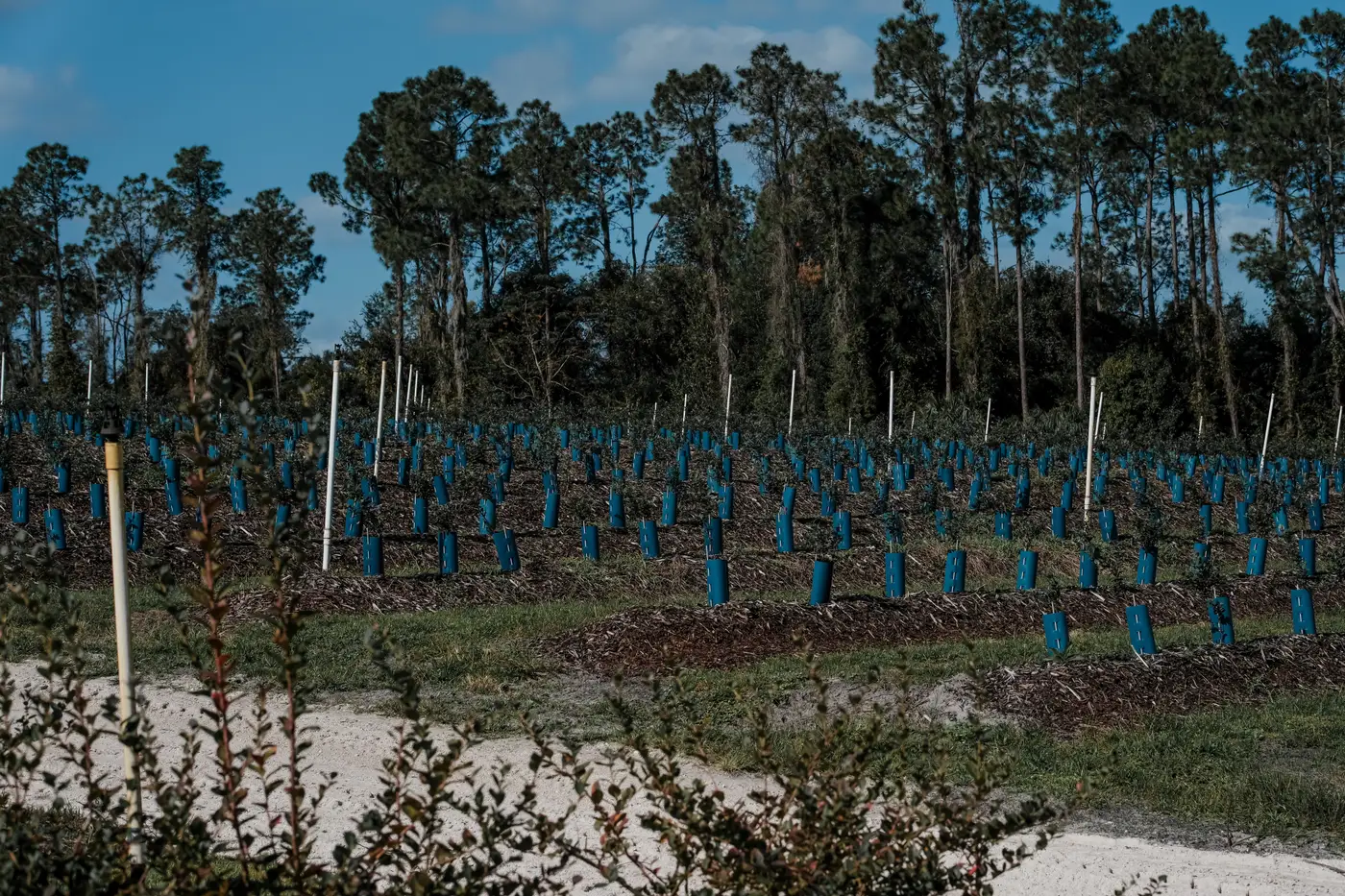
Every planting spec picks a stock type for a reason: cost, lift window, species, site conditions. Every contractor has an opinion about which one makes it through the first winter. Stock type mainly shifts where risk shows up on a block. What determines survival is handling between the nursery and the hole, timing against the weather window, and whether the crew got full root-to-soil contact.
Two stock types, two failure modes
Bare-root seedlings come out of the nursery dormant, with roots exposed from the moment they're lifted to the moment they go in the ground. That makes them cheap to transport and plant fast, but it also means the planting window is tight. Hold bare-root stock too long in a bag on a warm tailgate, or let roots dry out during a long day of bagging-up, and you lose vigor before the seedling ever sees soil. Bare-root also tends to show frost heave on exposed, cultivated ground where the root system hasn't had a season to anchor.
Container stock arrives with a plug of media wrapped around the roots, which buys a longer planting window and better buffer against rough handling. The trade-off shows up underground. On compacted or heavy clay sites, roots can struggle to push out of that plug into the surrounding soil, a condition most crews know as girdling or J-rooting if the hole wasn't dug deep enough to seat the plug straight. Container seedlings are also heavier per unit, which on a steep or remote block means slower planting rates and more fatigue-driven shortcuts late in the day.
Neither stock type is more forgiving across the board. A bare-root crew working a well-timed, well-watered window will usually outperform a rushed container job on the same ground, and the reverse holds just as often on a drought-prone site where the extra root mass in a container plug carries a seedling through its first dry spell.
What the stocking check is actually measuring
Here's where it matters for the paperwork. Almost no planting contract sets a pass bar by stock type. The contract sets a stocking density, a minimum number of live stems per hectare at a check date, usually at twelve months and sometimes again at twenty-four. Whatever went in the ground, bare-root or container, gets measured against that same number. If the count comes in under the hold figure, the contract calls for beat-up planting to fill the gaps, regardless of what caused the mortality.
That's worth repeating because it changes how you should think about a bad establishment year. A contractor who planted bare-root into a dry spring and a contractor who planted container stock into compacted ground both end up answering to the same stocking density clause. The stock-type decision happened at order time. The stocking check only cares about what's alive now.
Where this leaves a stocking report
A walked sample plot can tell you roughly how a block is tracking, but it's slow to run across a full planting area and it's easy to miss patchy mortality that clusters on one aspect or one soil type rather than spreading evenly. A low-altitude flight that counts every seedling across the block gives you the gap pattern instead of an estimate extrapolated from a handful of plots, which matters most when the result triggers a beat-up order under contract. Reforestation Monitor was built around exactly that use case: turning an annual flight into a seedling-by-seedling stocking report so the infill order goes out against real gaps, not a guess.
If your block is coming up on its check date and you're weighing a walked sample against something that counts the whole area, it's worth a look before the season gets away from you.