Browse damage or planting failure? How to read first-year seedlings
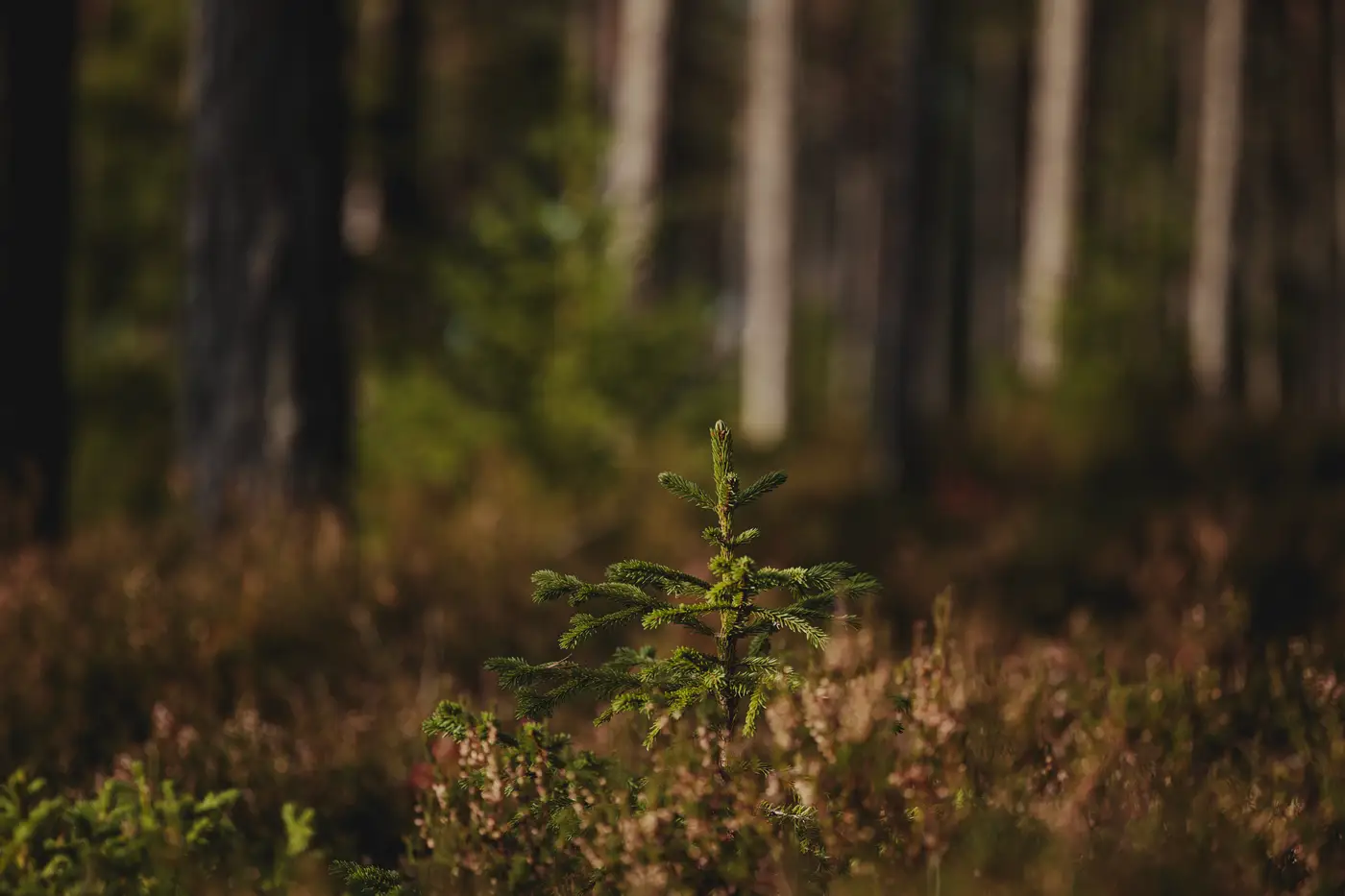
First-year stock checks turn up the same puzzle every autumn: a scatter of seedlings that look rough, and a foreman asking whether that's browse or whether the stock just didn't take. The two get lumped together in casual talk, but they trigger different contract responses. Browse damage on a seedling with a live root collar is often a wait-and-see or a targeted protection job. A dead seedling is a beat-up line item. Getting the call wrong either under-reports infill you're owed or sends a crew out to tube seedlings that were never going to make it anyway.
What browse damage actually looks like on the stem
Deer don't have upper incisors, so they tear rather than clip. Look at the cut end of the leader or lateral: a ragged, pulled fiber at an angle, not a clean 45-degree slice. A clean angled cut usually means rabbit or hare, which work closer to the ground and take whips and low laterals rather than the terminal bud. Rodent damage tends to show as girdling at or just above the root collar, with gnaw marks you can see with a thumbnail scrape.
The giveaway that separates browse from a dying seedling is what's happening below the damage. Scratch the bark on the stem under the browsed point. Green cambium means the plant is alive and will likely push a lateral bud to take over as a new leader, even if it loses a year of height growth doing it. On conifers, check for resin flow at the wound, a live tree usually shows some. If the seedling still has turgid needles or leaves lower down the stem and the root collar is firm, it survived the browse event. It may end up multi-leadered or set back a season, but it's not a mortality.
Browse also clusters in patterns that soil-driven mortality doesn't. It tends to follow travel corridors, block edges next to standing timber or cover, and runs heavier where herbaceous competition is thin enough that seedlings stand out as the easiest bite in the block. If you're seeing damage concentrated along one tree line and clean elsewhere, that's a browse pressure story, not a planting quality one.
What a true planting failure looks like instead
A dead seedling from poor planting technique or site conditions shows a different set of signs, and they're usually visible without needing to find a browse wound at all. The needles or leaves are uniformly desiccated and brown or have dropped entirely, not just stripped from the top. Scratch the stem anywhere and you get dry, brown tissue instead of green cambium. Pull gently on the seedling: if it comes out of the ground with little resistance, or the root plug has air pockets around it, you're likely looking at J-rooting, planting too shallow, or a plug that dried out before or during planting.
These failures cluster by cause rather than by browse pressure. Drought stress shows up on south-facing slopes and thin soil pockets across the whole block. Planting-crew error tends to run in rows or in the order plugs came out of the cooler, since a bad batch of stock or a tired crew near the end of a long day produces a run of failures rather than a scattered one. If your dead seedlings are following rows instead of following deer trails, that's a planting-technique signal, and it belongs in a different conversation with the contractor than a browse-protection one.
The spatial pattern matters more than any single stem when you're trying to sort these two apart. A handful of browsed tips scattered through the block, most of them still green below the wound, reads as pressure to manage. A patch of uniformly dead, dry stock running along a planting row, or concentrated on one soil type, reads as a stocking failure. That calls for replanting, not a protection job.
That's the gap a walked sample struggles to close: a crew covers maybe a few hundred stems in a day, which isn't enough to separate a browse-pressure pattern from a planting-technique pattern across a multi-hectare block. Reforestation Monitor maps where the gaps actually sit against the planting grid from an annual flight, so you can see whether the losses are clustered where deer traffic runs or strung out along the rows your crew planted on a Tuesday afternoon.
If your stocking report needs that kind of block-level picture before the infill crew gets scheduled, that's exactly the gap Reforestation Monitor is built to fill.