Natural regeneration vs planted seedlings in a stocking count
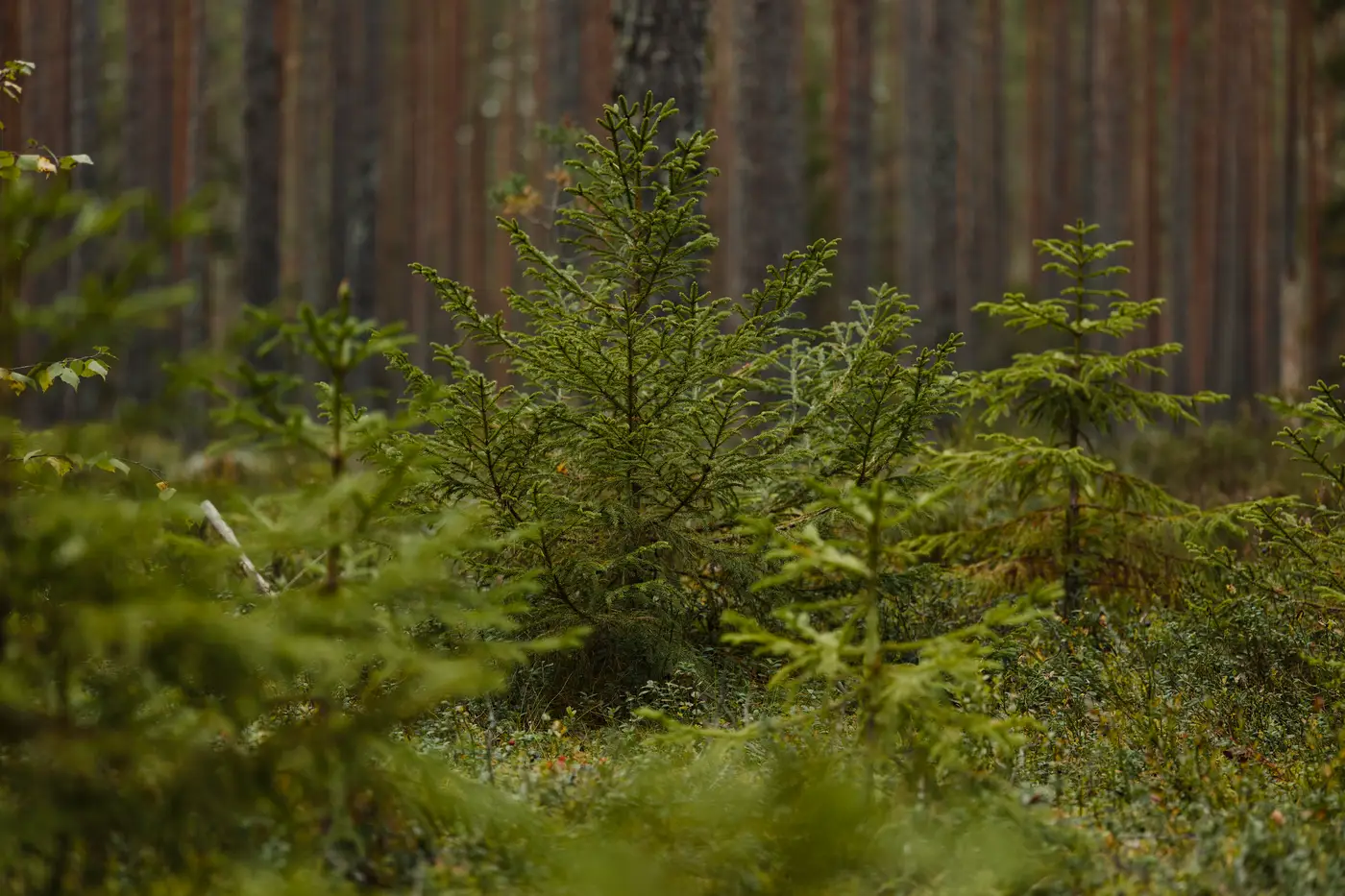
A stocking assessor walks a replanted block two years after planting and finds more seedlings in some patches than the planting plan accounts for. Some of those extra stems are volunteers that seeded in on their own. The question that comes up every time: do they count, and how do you even tell them apart from the stock the crew put in the ground?
Field signs that separate planted stock from volunteers
Spacing is the first tell. Planted stock sits on whatever grid the prescription called for, often 2m x 2m or 2.5m x 2.5m depending on the contract, laid out from a stake-out or GPS line. Look at the ground around the stem: a screefed patch, a mounded spot, or a cane marker still standing means someone put a spade in that exact spot. Natural regen doesn't respect a grid. It clusters near a seed source, a fence line, a remnant tree at the block edge, or a drainage line where seed washed in, and the spacing between stems is whatever gravity and wind gave it.
Age and size uniformity is the second tell. A planted cohort went in over a few weeks in one planting season, so across the block the stock sits in a tight height and root-collar band once you allow for slope and soil variation. Natural ingress germinates across several seasons as seed drops, so you'll find a two-year-old seedling a meter from a stem that's clearly been there four years, both volunteers, both legitimate, neither part of the contracted planting.
Species is the third tell, and it depends on the region and the prescription. If the contract specified a single species or a tight mix and you're finding birch, wattle, or whatever the local pioneer species is scattered through the block, that's regen filling gaps on its own, not the crop the contractor was paid to establish.
Does natural regen count toward the stocking target
This is written into the contract or the funding agreement, not decided on site. Some restoration funds write the stocking target as an outcome: so many stems per hectare of an approved species list at a given spacing tolerance, however they got there. Under that kind of clause, natural regen that clears the species and spacing test gets credited the same as planted stock. Other contracts are written to verify the planting job itself, meaning survival of the specific stock the contractor put in the ground, and volunteer regen gets noted in the file but doesn't offset a shortfall against the planted count. There's no industry default here. The clause that governs the stocking report is the one to read, not the project summary that came with the funding.
Whichever way it reads, the field notes should separate the two cohorts rather than folding them into one number. A report that just says "stocking met" without a planted-versus-natural split leaves the fund or the contractor with no way to answer the question later if the clause gets contested at the next milestone.
What doesn't change under either contract reading is the need for an actual count across the whole block. A walked sample that happens to cross a patch with good volunteer fill, or misses a thin corner entirely, tells you nothing about the planted-stock shortfall sitting two rows over. That's the gap a stocking check run against the planting grid is built to close: every seedling on the block counted against the spacing the contract specified, so a genuine gap in the planted stock shows up on its own instead of getting smoothed over by regen that happened to fill in nearby.
If your next stocking report has to answer this question for a fund or an auditor, it's worth seeing what a full count of the block looks like before the walked sample gets written up.