How to time a drone flight for first-year seedling counts
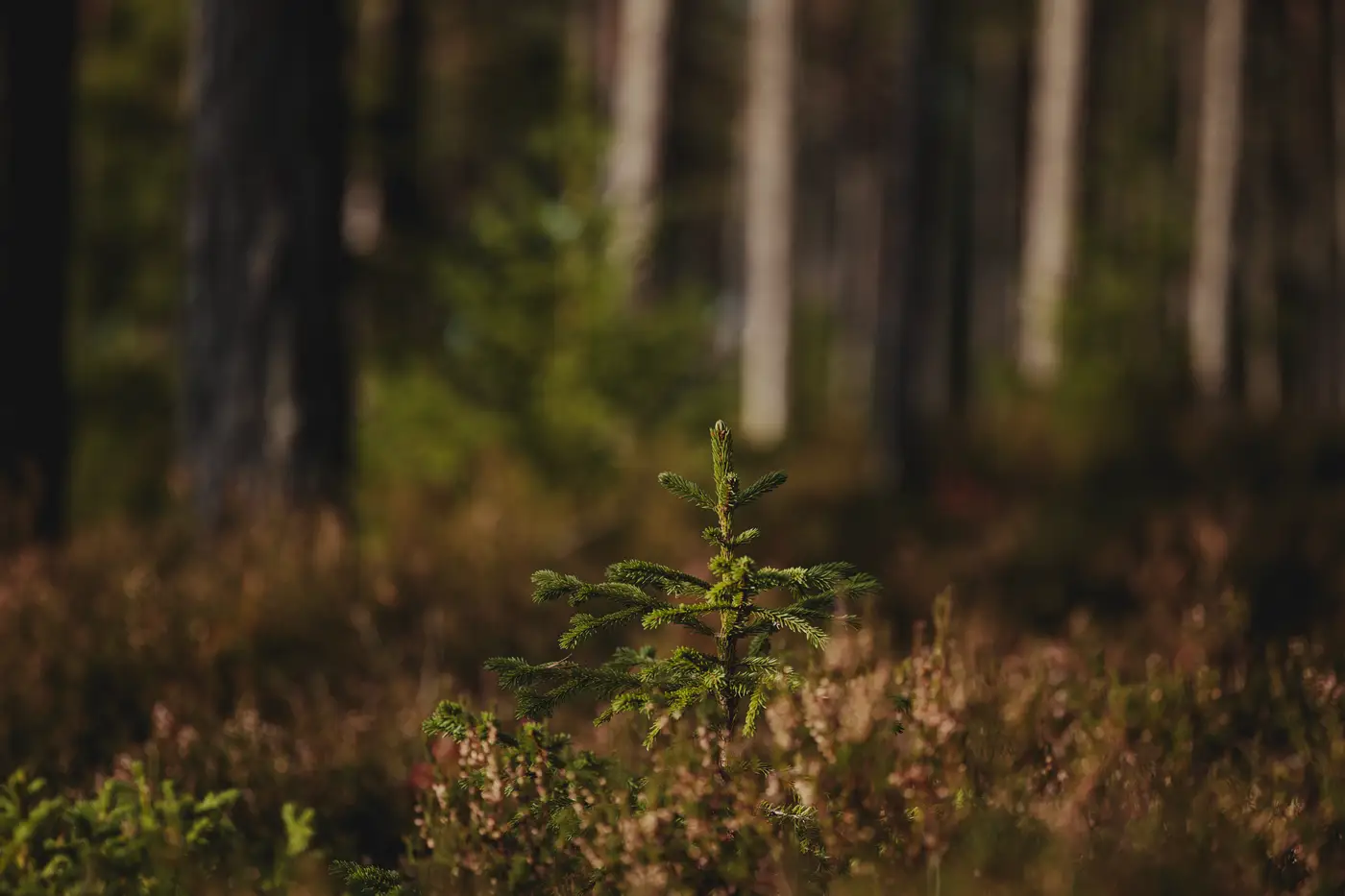
First-year stock on a replanted block is small, often under 30cm, and it doesn't stay easy to find for long. Get the flight date wrong and you're either counting bare dirt before the stems have leafed out, or flying over a block where salal, fireweed, or grass has already closed in over everything shorter than knee height. Neither flight gives you a count you can stand behind in front of a fund manager.
The window you're actually working with
For most coastal and interior blocks, the usable window sits somewhere between bud flush and the point where competing vegetation reaches seedling height. That's rarely more than six to ten weeks, and it moves with elevation, aspect, and species mix. A south-facing slope at 400m leafs out and grasses over faster than a shaded draw two ridges over on the same block.
Conifers give you a bit more room because a dead stem still looks like a stem against bare mineral soil, at least for the first season. Hardwoods and broadleaf stock are less forgiving. A dormant hardwood seedling and a dead one look identical from the air, so you need leaves out before a flight tells you anything about survival rather than just presence.
The practical rule most crews work to: fly after flush, before the competing vegetation on that specific unit gets taller than the seedlings. On a block with heavy slash or grass seed in the site prep, that can mean flying in late spring rather than waiting for the "ideal" mid-summer growth stage, because by midsummer the count is as much about counting grass clumps as counting trees.
Why sub-10cm ground sample distance changes the timing math
A sub-10cm GSD flight needs to fly low and slow enough to resolve individual stems, which means longer flight times per hectare and more battery swaps than a standard orthomosaic pass. That makes light conditions matter more than they would for a coarser survey. Hard midday sun on a slope throws shadows that can hide a short seedling behind its own stem shadow or a neighboring stump. Early morning or a bright overcast day gives flatter light and fewer false gaps in the imagery.
Wind matters too, more at low altitude than high. A gusty afternoon that would barely register on a 1500ft orthophoto mission can push a low-altitude pass off its planned overlap and leave stitching gaps right where you need clean coverage.
Ground conditions set the outer limits before any of that: frost heave in early spring can tip seedlings sideways and make them read as down stock that isn't actually dead, and a block that's still too wet to walk for ground-truthing is too wet to trust the flight against. Most crews wait until access roads have dried out enough to get a vehicle in, which also happens to line up reasonably well with the flush window on most sites.
Matching the flight to the contract clock
Planting contracts usually carry a stocking survey obligation on a fixed timeline, often first-year and third-year checks, sometimes with a beat-up window that closes by a certain date. That makes the flight date a scheduling decision as much as a biology one. If the contract window and the vegetation window don't line up cleanly, the contract window wins, and you fly a bit earlier than ideal rather than risk missing the deadline for triggering infill planting.
Pick the earliest date after flush where the block still reads clean from the air, confirm access and light conditions, and don't hold out for a "perfect" growth stage that might arrive after the grass has already closed over. A stocking check that's two weeks early and readable beats one that's on-schedule and buried in brush.
Reforestation Monitor runs this kind of count from a sub-10cm annual flight and flags exactly where the gaps sit on the block, which is useful once you've got the timing right. If you're scoping a first-year check on a replanted block, see how the count and gap map work before you lock in a flight date.