Walked plot sample vs full-block stocking count: what a stocking report needs
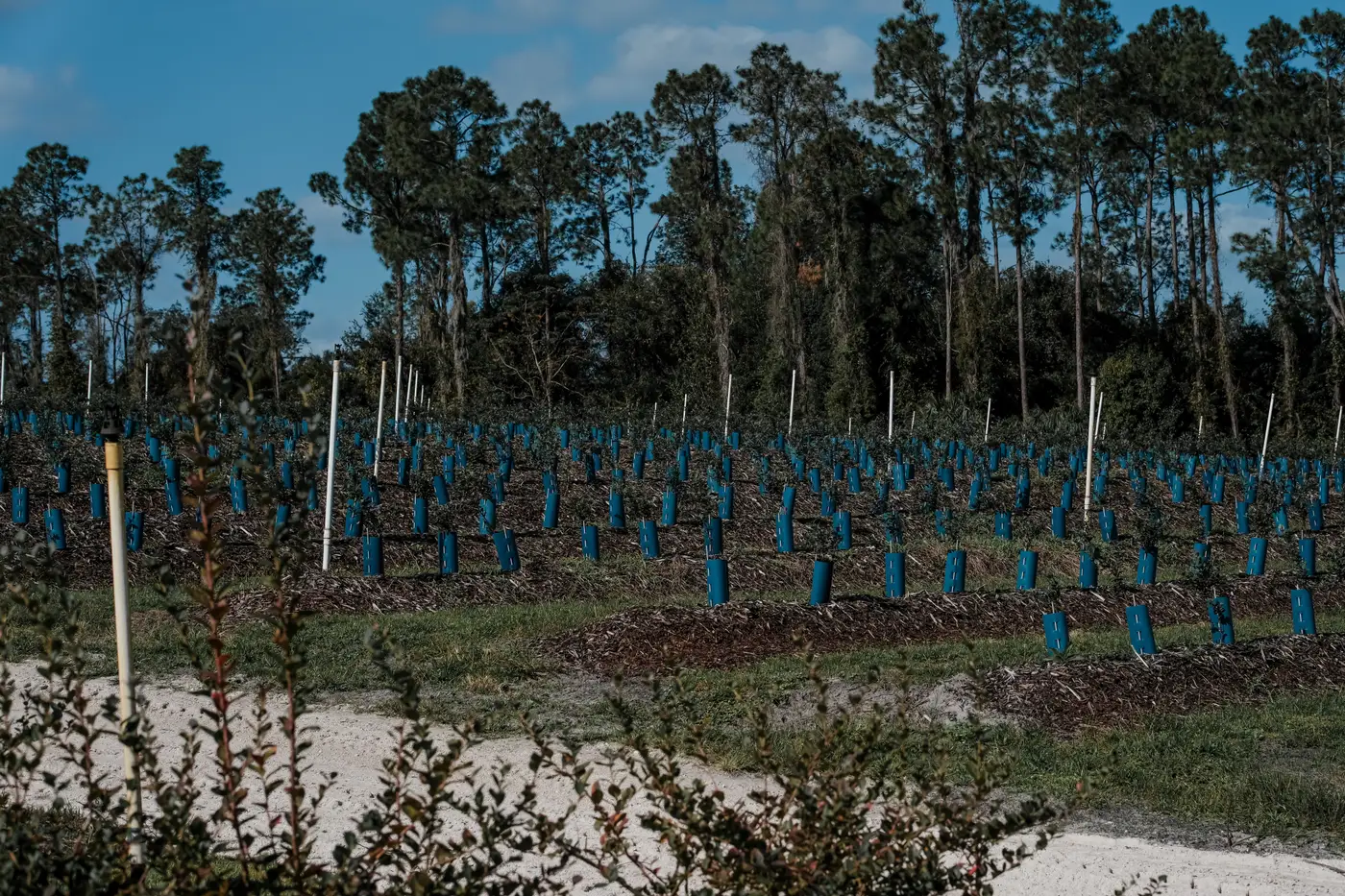
A stocking survey has always meant one of two things: somebody walks transects through the block and counts seedlings in a run of small plots, or somebody (or something) counts every seedling on the block. Most contracts have run on the first method for decades, mostly because the second one used to mean an impractical amount of fieldwork. That's changing, and it's worth being clear on what each method gives you before the next stocking report is due.
How a walked plot sample works
A crew lays out plots on a grid or a randomised pattern across the block, usually some fixed radius or fixed area each, and counts live stems inside the plot boundary. The plot count gets scaled up to a stems-per-hectare figure, and that figure gets compared against the stocking standard in the contract. It's a method built for a pre-drone world: a crew with tape measures and a tally sheet is the only practical way to estimate density across fifty or a hundred hectares without walking every square metre.
The method works reasonably well for a question like "is this block broadly stocked to standard." It works less well for a question like "which part of this block isn't." Plots sit where the sampling design puts them, and the gaps between plots are where mortality tends to cluster, along a wet seep, down a browse line, on a north-facing pocket that dried out last summer. A sample can tell you the block is under stocking without ever showing you where the under-stocked ground is.
Where the sample count breaks down
The trouble shows up at the infill stage. A contract usually triggers beat-up planting once stocking falls below a threshold, but the crew doing the infill still needs to know where to plant, not just how many seedlings to bring. A walked sample gives a defensible average. It doesn't give a gap map. So the infill crew either walks the whole block again to find the gaps, which is the fieldwork the sample was meant to avoid in the first place, or they plant on general impression and some of that infill effort lands on ground that was already fine.
There's also a timing problem. Plot crews go in once, maybe twice, in a season, and scheduling them around weather, access, and crew availability stretches the gap between planting and the stocking report. A restoration fund waiting on that report to release the next tranche, or a contractor waiting on it to know whether this block is closed out or still owes beat-up planting, is waiting on a crew's calendar as much as the block's condition.
None of this makes plot sampling wrong. It's a statistically sound way to answer a yes/no stocking question cheaply, and for blocks where the planting went in clean and even, that answer is usually all anyone needs. The gap is on blocks where mortality is real but patchy, which is most blocks after a dry spring or a deer season.
A full-block count changes what the report can show
A full-block count, every seedling located and tallied rather than estimated from a sample, answers a different question. Instead of "is this block above or below the stocking standard," it answers "where on this block does it fail, and by how much." That's the number a beat-up planting clause actually needs to trigger correctly, and it's the map an infill crew needs to plant efficiently instead of by eye.
Reforestation Monitor builds that count from a single low-altitude flight over the block, counting individual seedlings and flagging the gaps rather than sampling a subset and scaling up. It's available today as a pilot on a per-block basis, built around exactly this contract problem: a stocking number that holds up and a gap map that tells the infill crew where to go.
If a stocking report is coming due on a replanted block and a walked sample is the only option on the table, it's worth asking whether a full count of that block is available first.