What counts as understocked under a planting contract
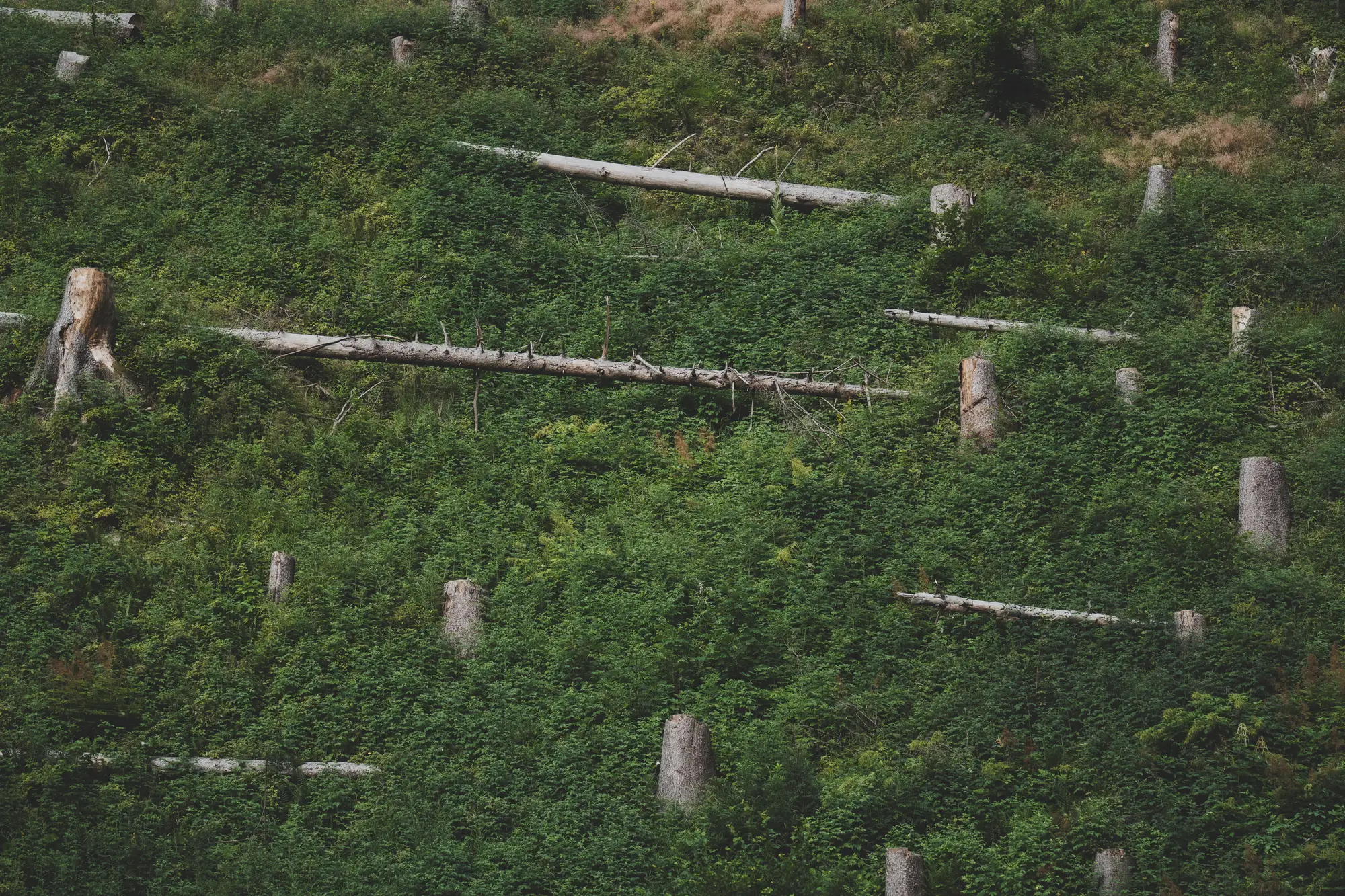
If you've ever argued over a stocking report with a client or a fund manager, you already know the real fight usually isn't about the trees. It's about the count.
"Understocked" sounds like a simple word. In a contract it's a specific threshold written into the specification, measured against a method also written into the specification, and the two of those together decide whether you owe beat-up planting or whether the block passes as-is.
Stocking standard: what the contract actually promises
A stocking standard is the minimum number of live, well-spaced seedlings per hectare the contract requires at a given assessment point, usually first-year survival or a free-to-grow check a few years out. It's not "we planted X stems." It's "X stems are alive, spaced at least Y metres apart, and still standing at the time we check."
That spacing clause matters more than people give it credit for. Two seedlings a foot apart don't count as two stocked spots in most specifications, they count as one, because the standard is written around even distribution across the block, not raw survival count. A contractor who's hand-counted a plot and come up short has usually found this out the hard way: the tally sheet said 1,400 stems per hectare, the stocking report said 1,050, and the difference was all seedlings too close together to count twice.
Stocking percentage threshold: where "understocked" kicks in
The threshold itself is a number set in the contract or the funding programme's spec, and it's not the same from one agreement to the next. What's consistent is the structure: the contract names a required stocking percentage of the planned planting density, and anything the survey comes back below that line is a shortfall. Below it, the contract usually triggers an obligation, not a conversation. Beat-up planting, also called infill, has to happen in the gaps before the next growing season, at the contractor's cost if the shortfall traces back to planting stock or crew error, or shared if it's attributable to drought, frost, browse, or another named risk in the contract.
This is why the count method is the whole argument. A walked sample, a few dozen plots scattered across a block and extrapolated to the whole area, is a defensible method and it's what most contracts still specify. It's also a method that can miss a cluster of dieback sitting just outside the sampled plots, or flag a patch that's in good shape because the sampler's transect happened to run through a thin stretch. Either way, the number that goes in the stocking report came from maybe 2-3% of the planted area, not all of it.
Reforestation contract terms worth reading twice
A few clauses decide how much this costs you before a single beat-up crew gets dispatched:
- Assessment window: when the count has to happen relative to planting date. Miss the window and you may be re-measuring against a different growth stage than the one the standard assumed.
- Gap definition: how big an empty patch has to be before it counts as a stocking gap rather than acceptable natural spacing variation.
- Remedy clause: whether a shortfall means re-plant the whole block, infill the gaps only, or renegotiate the stocking percentage with the fund.
- Cost allocation: who pays for beat-up planting when the cause of loss isn't clearly the contractor's.
None of these clauses tell you where the gaps are. They just tell you what happens once you know.
That's the part a full count changes. Instead of extrapolating from a sampled plot to the whole block, a seedling-by-seedling count flown over the entire planted area shows every gap as it actually sits on the ground, not as a statistical guess from a walked transect. For a contractor who has to sign a stocking report and stand behind it, that's the difference between defending a sample size and handing over a number with the gap map attached.
If you're staring down a stocking report deadline on a replanted block, it's worth seeing what a full count looks like before you commit a crew to a walked sample.