What is a free-to-grow stand in a reforestation contract?
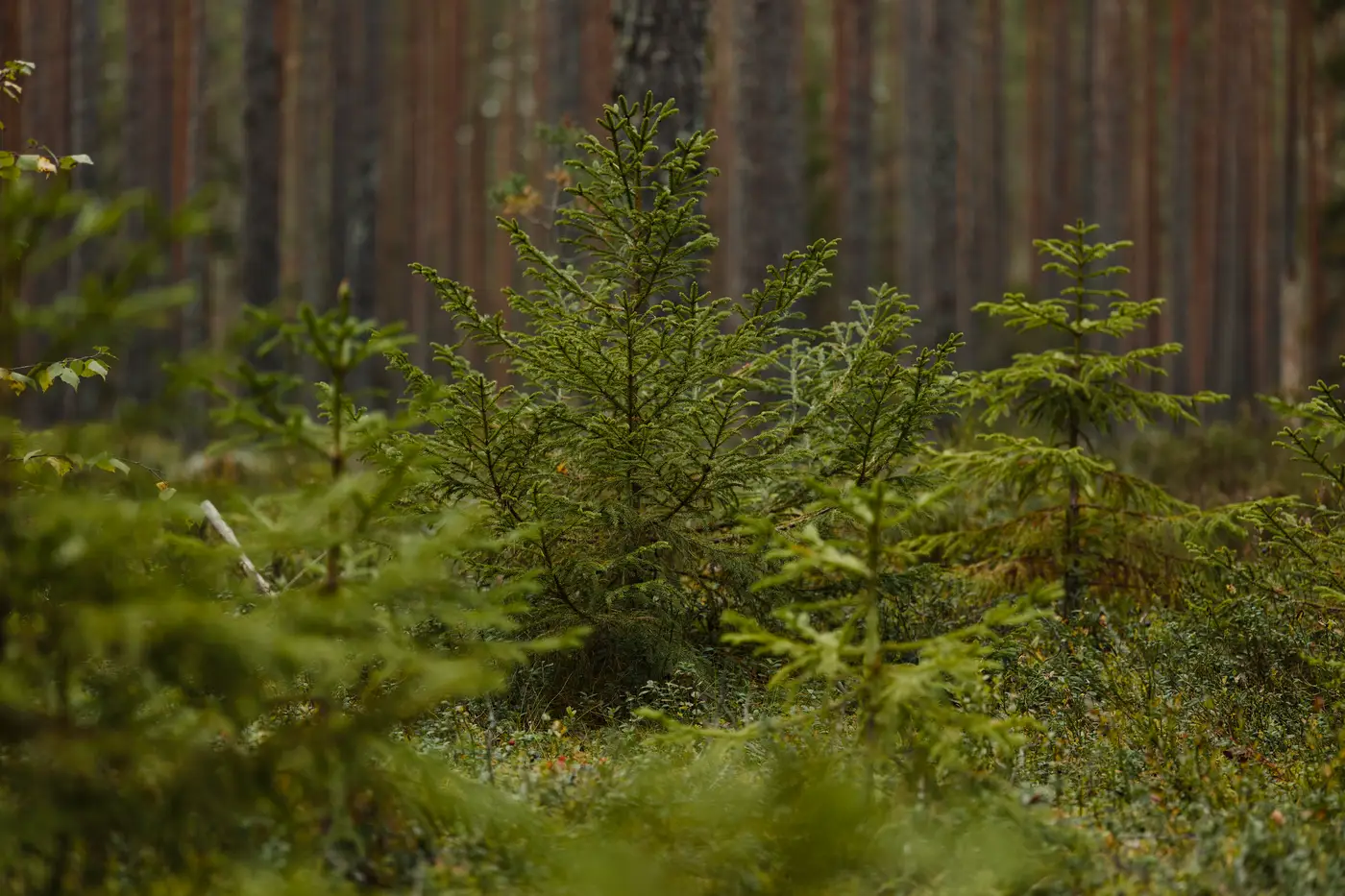
A free-to-grow stand is a block that's cleared the stage where it still needs nursing. The seedlings are rooted, they're taller than the brush, salal, or fireweed competing for the same light, and nobody expects them to die off from suppression, browse, or drought in the next season or two. Once a block hits free-to-grow, the contractor's silviculture obligation on that unit is usually done, or close to it. That's why the term shows up in almost every reforestation contract and funding agreement: it's the line that closes out a liability, releases a holdback, or triggers the final payment milestone.
The phrase gets used loosely in conversation, but in a contract it's doing specific work. "Free to grow" isn't the same as "planted" and it isn't the same as "survived." A block can have decent survival at year one and still fail free-to-grow at year three if brush has overtopped the crop trees, or if browse has knocked height growth back hard enough that the stand won't close canopy on schedule. The standard is forward-looking: can this stand get to maturity on its own, without more tending, more herbicide, more brushing?
What a free-to-grow assessment checks
A free-to-grow assessment is the fieldwork that answers that question for a given block. Historically that's meant a crew walking transects or fixed-radius plots, tallying crop trees, scoring them against nearby competing vegetation, and extrapolating a stocking estimate for the whole unit from a sample that might cover a few percent of the actual ground.
The things an assessment is looking for are fairly consistent across programs, even if the exact thresholds in a contract vary:
- Enough live, healthy crop trees per hectare to meet the stocking target in the planting agreement
- Those trees clear of, or taller than, the competing brush and grass around them
- No widespread browse, disease, or dieback that would reverse the gains
- Gaps distributed in a way that doesn't leave large unstocked patches even if the block-wide average looks fine
That last point is where a lot of disputes start. A plot-sample average can say a block is stocked at target density while a four-hectare patch in the northeast corner never took. Walked plots are built to estimate a mean, not to find where the holes are. That's a real limitation of the method, not a knock on the crews doing the walking. It's slow, physically demanding work on steep or brushed-in ground, and a sample is a sample.
Why the standard matters to the people signing the contract
For a planting contractor, free-to-grow is the finish line that releases the performance bond or the final invoice. For a restoration fund or a licensee footing the bill, it's the proof that the dollars spent on planting and tending produced a stand, not just a line item. Either way, the number that gets reported, stocking density at free-to-grow, has money and sometimes regulatory compliance attached to it. Mines, forest licensees, and public funding programs all write it into contract language because it's the one metric that ties planting performance to an outcome you can verify on the ground, years after the crews have moved on.
Verifying it well has traditionally come down to a cheap, coarse sample on one end or an expensive, exhaustive walk of the whole block on the other. Neither option tells a contractor exactly where the gaps are, which is the information you need to send a crew back for beat-up planting instead of replanting the whole unit or guessing at a patch count.
That's the gap a flight-based stocking count is built to close: counting every seedling in the block from a low-altitude pass instead of extrapolating from a sample, so the gaps show up as locations, not just a percentage. Reforestation Monitor runs that check against an annual flight and hands back a stem count and a gap map for the block, the same stocking question a free-to-grow assessment is actually trying to answer, with the ground covered.
If you've got a block coming up for a free-to-grow call this season, it's worth seeing what a full count of the planted stems looks like next to the plot-sample number you'd otherwise be reporting.